This article is part of the Mendo Education Series and is intended to help members better understand cannabis products, production methods and member considerations.
Rubicon Organics may be the parent company, but many Canadians are more familiar with the individual brands within its portfolio: Simply Bare Organic, 1964 Supply Co., Wildflower and Homestead Cannabis Supply.
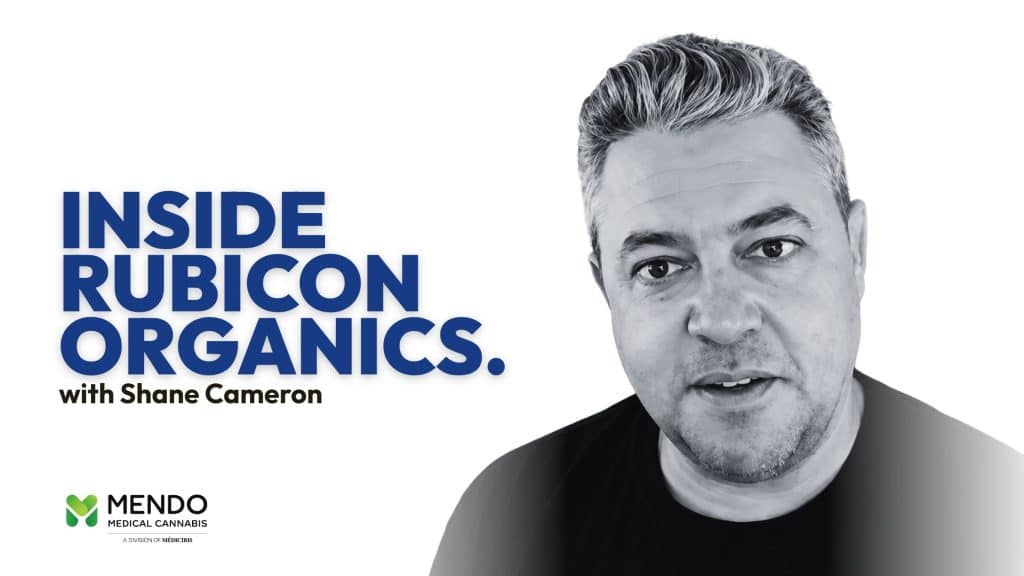
For this Mendo Medical conversation, Tom Ritchie sat down with Shane Cameron of Rubicon Organics to look behind those brands and explore how the company approaches cultivation, genetics, product consistency and education.
The conversation also examines some of the challenges licensed producers face when supplying both medical and recreational markets, Rubicon’s expanding cultivation capacity, and how growing international demand can affect decisions about Canadian supply.
Watch the Full Interview
Watch the complete conversation with Shane Cameron of Rubicon Organics on the Mendo Medical YouTube channel to hear the discussion about cultivation, genetics, supply, medical cannabis education and the changing Canadian and international markets.

Understanding Rubicon’s Four Brands
One theme throughout the conversation was the distinction between Rubicon Organics and the brands members may encounter.
Rubicon’s portfolio discussed in the interview includes Simply Bare Organic, 1964 Supply Co., Wildflower and Homestead Cannabis Supply. Each serves a different role within the company’s portfolio.
Simply Bare Organic
Cameron describes Simply Bare as being centred around organic cultivation and genetics.
He explained that Rubicon uses a rotational genetics program, with selected cultivars progressing through an internal evaluation process before reaching the market.
The cultivation program uses living soil and organic growing practices. Cameron also discussed the company’s efforts to identify genetics that perform well within its particular growing environments.
According to Cameron, Rubicon’s network is used to identify prospective cultivars, which are then evaluated before being introduced into production.
1964 Supply Co.
While Simply Bare focuses heavily on selected genetics and organic cultivation, Cameron describes 1964 as being influenced by cultivars familiar from Canada’s legacy cannabis market.
The objective, he explained, is to bring recognizable genetics into the regulated market while maintaining Rubicon’s cultivation standards.
Both Simply Bare and 1964 are produced through Rubicon’s cultivation program in British Columbia.
Wildflower

Wildflower occupies a different category within Rubicon’s portfolio.
Cameron describes it as the company’s wellness-oriented brand, including topical and other non-flower formats.
For members researching different cannabis formats, the brand provides an example of how licensed producers are developing portfolios beyond dried flower.
Members should discuss individual cannabis products and their personal medical circumstances with an appropriate healthcare professional.
Homestead Cannabis Supply
Homestead serves another function within Rubicon’s cultivation and brand structure.
Cameron explains that cannabis crops do not always meet the specifications established for Simply Bare or 1964. Rather than assigning Homestead a fixed group of cultivars, the brand can include rotating products from Rubicon’s cultivation program.
“If they don’t meet those standards, that’s when they flow into Homestead,” Cameron explained.
This provides an interesting look at how a multi-brand licensed producer can use internal specifications to determine where a particular harvest ultimately belongs within its portfolio.
Organic Cultivation and Living Soil
Cultivation was central to Cameron’s explanation of Rubicon’s approach.
At its Pacifica facility, Rubicon uses living soil and certified organic cultivation practices for its organic production. Cameron explains that this approach involves additional considerations when managing plant health, yield and consistency.
He also points to the importance of canopy management and close monitoring throughout the growing cycle.
For members, these distinctions can be useful when researching how cannabis is produced. Terms such as organic, living soil, indoor and hybrid greenhouse describe cultivation practices and environments. They should not be interpreted on their own as indicators of how an individual will respond to a cannabis product.
Adding Indoor Cultivation
One of the significant operational developments discussed in the interview is Rubicon’s addition of a second cultivation facility. Cameron explains that the additional indoor environment gives the cultivation team another option when evaluating genetics.
A cultivar that performs well under one set of environmental conditions may behave differently under another.
“Just because you have one genetic growing in organic, that might not mean that that’s the best expression of that genetic,” he said.
The additional facility gives Rubicon another cultivation environment in which genetics can be assessed and produced. It also increases the company’s ability to address production capacity as demand changes.
The Challenge of Consistent Medical Supply
Product availability can be particularly relevant within medical cannabis. Cameron identifies consistent supply as one of the significant challenges Rubicon has faced.
“It’s one of the biggest challenges we face,” he said.
Demand can fluctuate across Canadian recreational channels, medical platforms and international markets. Agricultural production also has its own limitations, particularly when specific cultivation methods or genetics are involved.
Rubicon’s expanded cultivation capacity is intended, in part, to address those constraints. Cameron said the company expects the additional production capacity to contribute to greater availability as it moves into 2027.
For medical members, the broader issue is worth understanding. Cannabis remains an agricultural product, and maintaining the availability of specific cultivars can involve production, genetics and supply-chain considerations.
Medical and Recreational Cannabis Require Different Education
Having worked with recreational retailers and medical channels, Cameron sees differences in how information is accessed. In recreational cannabis, consumers may regularly explore new cultivars, formats and brands.
Medical members can have different priorities. Once someone has established an approach with their healthcare professional, access to information about product composition, availability and consistency may become particularly relevant.
Cameron believes education is therefore an important part of the medical channel. That includes helping members understand what a product contains, how it was produced, what cannabinoids and terpenes are present, and how products differ without presenting that information as medical advice. This is also where medical platforms can serve a different function from recreational retail.
Medical authorization begins with an appropriate healthcare professional. Educational platforms can then help members better understand the products and suppliers available within the regulated medical system.
Consumers Are Asking More Detailed Questions
Cameron has seen cannabis education change since legalization. One example is terpenes.
“The conversation about terps five years ago was very small,” he said.
Today, he sees more people asking about terpene profiles, genetics, cultivation and the companies producing their cannabis. That shift is significant because cannabinoid percentages represent only part of the information available about a product.
Genetics, terpene profiles, cultivation methods, product format and manufacturing processes can all provide additional context when researching cannabis.
These characteristics should be treated as product information rather than predictors of an individual’s medical outcome.
Canada First, International Markets Second
International cannabis was another significant part of the discussion. As regulated medical markets develop outside Canada, Canadian licensed producers have increasing opportunities to supply international partners.
Cameron says Rubicon’s approach has been to prioritize its Canadian business while gradually developing international relationships.
“We really take a domestic approach first and then international second,” he said. That can create an operational balancing act.
International markets represent additional demand for Canadian production, while domestic recreational and medical channels also require reliable supply. Cameron says Rubicon evaluates those opportunities while maintaining its focus on developing its brands within Canada.
Taking Canadian Brands International
International cannabis markets are also beginning to move beyond simply importing Canadian flower. According to Cameron, international partners are increasingly interested in established Canadian brands.
He points to the United Kingdom as one example, where 1964 has been introduced into the medical market.
Rubicon approaches these relationships gradually, Cameron explains, sometimes beginning with supply or white-label arrangements before expanding a brand relationship.
“We always take a crawl, walk, run position,” he said.
For Canadian members, this provides a glimpse into how Canada’s regulated cannabis industry is becoming increasingly connected to developing medical markets internationally.
The Challenge of Cannabis Education
As members become more informed about cannabis, the information they are looking for is also becoming more detailed. Cameron says conversations have expanded beyond cannabinoid percentages to include terpenes, genetics, cultivation methods and the people behind the products.
For medical members, access to clear information can be particularly important. Understanding how a product was grown, its cannabinoid and terpene profile, and how a producer approaches consistency can provide useful context when navigating available options.
Cameron sees licensed producers and medical platforms as having a role in making that information accessible. The goal is not to tell members which products to choose, but to provide enough information for them to better understand what is available and support informed conversations with appropriate healthcare professionals.
Why Brand Transparency Matters
Toward the end of the conversation, Cameron returns repeatedly to the people and cultivation practices behind cannabis brands. His view is that understanding a producer requires looking beyond a label.
For members, that can mean asking questions such as:
- Who grows the cannabis?
- Where is it cultivated?
- What cultivation methods are used?
- How are genetics selected?
- How does the producer approach consistency?
- What information is available about cannabinoids and terpenes?
- How does the company communicate changes in products or availability?
These questions do not determine whether a product is appropriate for an individual member. They can, however, provide useful information for informed conversations with healthcare professionals and medical cannabis educators.
The Continuing Role of Medical Cannabis
Cameron believes maintaining a distinct medical cannabis system in Canada remains important. His reasoning focuses heavily on access to information and support.
Medical members may have questions that extend beyond what a recreational retail environment is designed to address. Medical authorization also involves healthcare professionals who can consider an individual’s health history, medications and other relevant factors.
Mendo Medical’s role within that system is educational. By providing interviews with licensed producers and industry professionals, members can learn more about the people, cultivation methods, technologies and decision-making behind products available through Canada’s regulated medical cannabis system.
Frequently Asked Questions
What brands are part of Rubicon Organics?
The interview discusses four brands within the Rubicon Organics portfolio: Simply Bare Organic, 1964 Supply Co., Wildflower and Homestead Cannabis Supply. Each brand has a different role within the company’s broader portfolio.
What is the difference between Simply Bare and 1964?
Cameron describes Simply Bare as placing particular emphasis on selected genetics and certified organic cultivation. He describes 1964 as being influenced by cultivars familiar from Canada’s legacy cannabis market, brought into the regulated market through Rubicon’s cultivation program.
What is Homestead Cannabis Supply?
Homestead operates differently from Rubicon’s other brands. Cameron explains that it can include rotating products from Rubicon’s cultivation program, including harvests that do not meet the specifications established for Simply Bare or 1964.
Why did Rubicon add an indoor cultivation facility?
Cameron explains that different genetics can respond differently to different growing environments. Adding indoor cultivation gives Rubicon another environment in which to assess and produce genetics while also expanding the company’s overall production capacity.
Why can consistent cannabis supply be challenging?
Cameron identifies consistent supply as one of the significant challenges Rubicon has faced. Cannabis is an agricultural product, while demand can fluctuate across recreational, medical and international markets. Cultivation methods, production capacity and the availability of specific genetics can also affect supply.
Does Rubicon export cannabis internationally?
Yes. Cameron discusses Rubicon’s developing international business and the introduction of 1964 into the United Kingdom. He describes the company’s approach to international partnerships as “crawl, walk, run,” with an emphasis on developing relationships gradually while prioritizing the Canadian market.
Why does cannabis education matter in the medical market?
Cameron believes medical members often require more detailed product information and support. Information about cannabinoids, terpenes, genetics, cultivation methods and product formats can help members better understand available options and support informed conversations with appropriate healthcare professionals.
Key Takeaways
- Rubicon Organics is the company behind Simply Bare Organic, 1964 Supply Co., Wildflower and Homestead Cannabis Supply.
- Simply Bare’s cultivation program emphasizes certified organic methods, living soil and genetics selection.
- 1964 focuses on cultivars with roots in Canada’s legacy cannabis market.
- Homestead can include rotating harvests from Rubicon’s cultivation program that do not meet specifications established for other Rubicon brands.
- Additional indoor cultivation capacity gives Rubicon another environment for evaluating genetics while expanding production capacity.
- Cameron identifies consistent supply as an important challenge as demand spans recreational, medical and international channels.
- Rubicon says it prioritizes its Canadian market while gradually developing international opportunities.
- Cameron has observed increasing interest in terpenes, genetics, cultivation methods and producer transparency.
About Shane Cameron
Shane Cameron works with Rubicon Organics and has experience across both recreational and medical cannabis channels. His work provides perspective on how licensed producers approach product education, supply consistency and relationships with medical platforms as Canada’s regulated cannabis industry continues to develop.