This article is part of the Mendo Education Series and is intended to help members better understand cannabis products, production methods and member considerations.
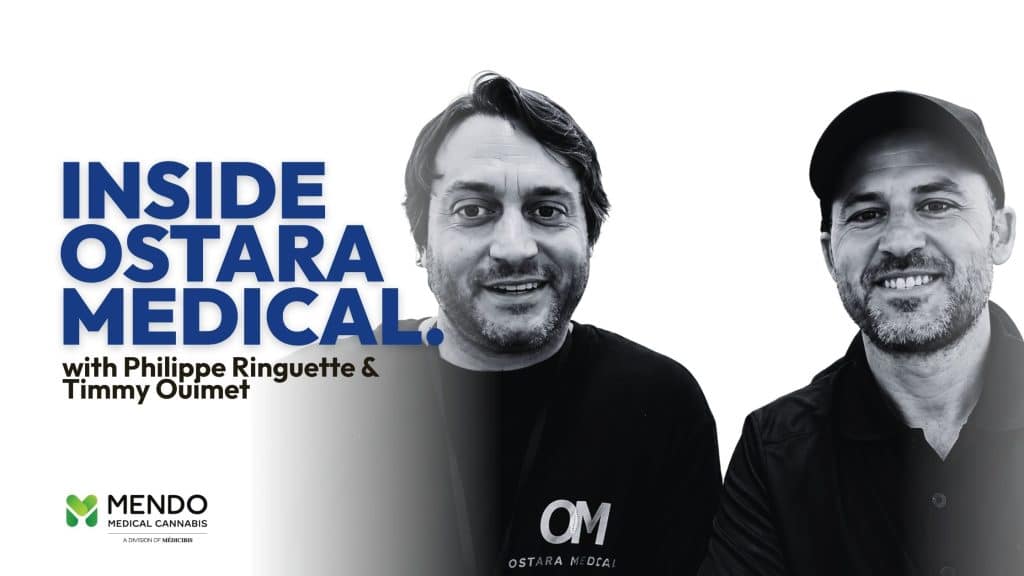
For Ostara Medical, cannabis cultivation is a family business. Mendo recently sat down with co-founders Philippe and Timmy to discuss how two families came together to build the Quebec-based licensed producer, why the company remains focused primarily on flower, and how years of pheno hunting have shaped its approach to cultivation.
The conversation also explored an important consideration within medical cannabis: consistency. For members who become familiar with a particular cultivar and cannabinoid profile, understanding how a producer approaches genetics, cultivation and production can provide useful context.
Watch the Full Interview
Watch the complete conversation with Philippe and Timmy of Ostara Medical on the Mendo Medical YouTube channel to hear their discussion about cultivation, genetics, medical cannabis and the realities of operating a family-owned licensed producer.
How Ostara Medical Began
Ostara Medical started with two families. Philippe entered the business alongside his father, while Timmy joined with his father, Serge. Philippe’s side brought experience in finance and accounting, while Timmy and Serge brought greater experience with cannabis cultivation.
The idea itself began simply. “We’re two families. It’s Timmy and his father, Serge, and it’s me and my father that we decided to start a business.” From conversations over breakfast came business plans, financial models and eventually the lengthy process of establishing a federally licensed cannabis operation. Philippe described obtaining the licence as a “crazy adventure,” particularly during the early years of Canada’s regulated industry.
Today, the company remains family owned, something Philippe and Timmy say continues to influence how they work with employees, partners and the medical market.
Pheno Hunting at the Centre of Cultivation
One of the clearest themes from the conversation was Ostara’s emphasis on genetics. Rather than selecting plants primarily according to yield, the team continually searches for phenotypes with characteristics they find distinctive.
“The passion starts with the plant.” According to the founders, Ostara has been pheno hunting since its first crop and has rejected roughly 500 to 600 phenotypes during that process. Yield is one consideration, but it is not necessarily enough to determine whether a plant stays in the genetic library. Some phenotypes produced relatively small harvests but displayed characteristics the team wanted to preserve, particularly their terpene profiles. That approach requires accepting that an interesting plant may not necessarily be the most commercially efficient plant in the room.
Why Consistency Matters in Medical Cannabis
For Philippe and Timmy, operating in the medical market places additional emphasis on consistency. Cannabis is an agricultural product. Genetics are only one part of the equation, with environmental conditions and cultivation practices also influencing each harvest. Ostara’s approach is to test potential new cultivars repeatedly before bringing them into its regular production rotation.
Philippe said a new cultivar may be grown through four or five cycles before the company decides it is ready. “If we put a new strain on the market, it’s been tested at least four or five times in a room. It’s been tried, it’s been tested, it’s been analyzed.” That process also means rejecting many candidates. While discussing an upcoming cultivar during the interview, Philippe estimated that approximately 100 other candidates may have been eliminated during the search process.
For members, this provides some insight into the amount of cultivation and testing that can happen before a new cultivar reaches a medical platform.
What Quality Means to Ostara
When asked to define quality, Philippe and Timmy did not point to a single measurement. Instead, they described it as the result of the entire cultivation system. “It starts with the building, it starts with the employees, it starts obviously with the plant.” That includes maintaining healthy plants, following established timelines and avoiding shortcuts simply to meet a production target. If a crop requires additional time, they said the company would rather adjust the timeline than rush the process.
Employee retention and workplace culture are also part of that philosophy. The founders remain actively involved at the facility, while cultivation employees are trained to perform different jobs rather than remaining exclusively within one task such as trimming or defoliation. That cross-training gives employees broader familiarity with the production process and provides flexibility within the facility.
Growing Cannabis in Quebec
Ostara operates in Quebec, which presents both advantages and limitations for a licensed producer.
One significant advantage identified by Philippe is electricity. Indoor cannabis cultivation can require substantial energy for lighting and environmental controls. Access to Hydro-Québec’s electricity rates, along with programs that can support investments in equipment and lighting, has helped Ostara update technology within the facility.
Philippe also pointed to Quebec’s recreational cannabis rules as a limitation, particularly the province’s 30 per cent THC cap for products sold through the recreational market. For Ostara, however, cannabinoid percentage is only one part of cultivar selection.
The company continues to explore plants based on factors including terpene expression, cannabinoid composition and cultivation characteristics.
Searching for Different Cannabinoid Profiles
Ostara’s genetic exploration has occasionally produced unexpected results. During its pheno hunting, the company identified a plant displaying an unusual THCVA result in laboratory testing. According to Philippe, testing showed approximately four to six per cent THCVA.
The discovery was not the result of a deliberate breeding program targeting THCVA. It emerged through the company’s ongoing genetic selection work. “I think we were pirates in an old life because we’re still just searching for that treasure.” For Ostara, discoveries like this are part of what keeps pheno hunting interesting.
Research into minor and acidic cannabinoids continues to develop. Their presence in a cultivar should not be interpreted as evidence of a particular therapeutic outcome, but identifying different cannabinoid profiles may provide useful areas for continued cannabis research.
Staying Focused on Flower
Ostara has considered expanding beyond dried flower. The company previously purchased equipment for producing products such as hash and rosin. Eventually, however, the founders reconsidered. “We sat down, all four of us, and we’re like, you know what, let’s focus on what we do good.”
Rather than dividing resources between cultivation and processing, Ostara decided to maintain its focus on growing flower. That does not necessarily rule out other formats in the future. Philippe noted that working with specialized processors could provide another option if the company eventually decides to use its flower for extracted products. For now, cultivation remains the priority.
Maintaining Several Cultivars in Rotation
Ostara typically works with several cultivars at once. Philippe described approximately six to eight genetics being maintained in rotation, providing a range of cannabinoid and terpene profiles rather than concentrating production around a single type of plant.
Cultivars discussed during the interview included Grape Stank, Bazooka, Strawberries and Cream, and an upcoming balanced cultivar called Essential Oil from Compound Genetics. Grape Stank is an example of Ostara’s willingness to retain challenging genetics. The founders explained that the plant initially produced relatively low yields and could be difficult to cultivate, but its characteristics convinced them to continue working with it. The cultivar later received recognition at the 2024 Karma Cup.
The larger takeaway is the selection process behind the plant. Commercial yield alone did not determine whether the genetic remained in Ostara’s cultivation program.
Medical and International Markets
Ostara has participated in international cannabis markets for several years. Export markets can create opportunities for Canadian licensed producers, but they also introduce another layer of regulatory and operational complexity.
The founders explained that international partners regularly visit and audit the facility, requiring Ostara to continuously maintain the standards expected by those markets. Rather than dedicating an entire cultivation room to a single buyer, Ostara may divide production between different channels. The founders said they intentionally continue reserving product for medical distribution even when other markets are available. “It’s not always just about money.” Their reasoning is partly about diversification, but also about maintaining established relationships with medical platforms and the members who rely on consistent access.
The volatility of international markets has reinforced that approach. Changes to import requirements or purchasing patterns in another country can quickly affect Canadian producers. Maintaining several distribution channels gives a smaller producer additional flexibility.
A Family-Owned Cultivation Business
Asked what they wanted someone unfamiliar with Ostara to understand about the company, Philippe returned to where the conversation began. It is family owned.
The founders work at the facility alongside their team and describe the business as one built around long-term relationships rather than rapid expansion. They also repeatedly returned to the same principle throughout the interview: don’t rush the plant. “We seriously take our time to do things correctly.”
For a company operating in an industry where production efficiency matters, that philosophy sometimes means accepting lower yields, rejecting potential cultivars or allowing a crop additional time before harvest. It also explains why pheno hunting remains such a significant part of what Ostara does. There is always another plant to evaluate.
Key Takeaways
- Ostara Medical was founded by Philippe and his father alongside Timmy and his father, Serge.
- The Quebec-based licensed producer remains primarily focused on cannabis flower and cultivation.
- Ostara says it has rejected approximately 500 to 600 phenotypes through its ongoing pheno-hunting program.
- Potential cultivars may be tested through several cultivation cycles before entering regular production.
- The company considers characteristics beyond yield when deciding which genetics to retain.
- Ostara identified a plant with an unusual THCVA profile through its pheno-hunting work.
- The company participates in both Canadian medical and international cannabis markets.
- Philippe and Timmy describe consistency, patience and employee involvement as important parts of their cultivation philosophy.
FAQs
Where is Ostara Medical located?
Ostara Medical operates its licensed cannabis cultivation facility in Quebec.
Who founded Ostara Medical?
The company was started by two families: Philippe and his father, along with Timmy and his father, Serge.
What does Ostara Medical primarily produce?
Ostara is primarily focused on cannabis flower and pre-rolls. Although the company explored producing products such as hash and rosin, the founders decided to concentrate their resources on cultivation.
How does Ostara select new cultivars?
According to Philippe and Timmy, the company conducts extensive pheno hunting and evaluates plants over multiple cultivation cycles before deciding whether a cultivar should enter regular production.
Does Ostara participate in international cannabis markets?
Yes. The founders said Ostara has participated in international markets for several years while continuing to allocate production to the Canadian medical market.
What is THCVA?
THCVA is the acidic precursor associated with THCV. Ostara discussed identifying a cultivar with an unusual THCVA laboratory result during its pheno-hunting program. Research into minor and acidic cannabinoids remains an evolving area of cannabis science.
Are Ostara Medical cannabis products available on Mendo?
Yes, Ostara Medical products are available to members including pre-rolls, dried flower, extracts, and more.
About Philippe and Timmy
Philippe and Timmy are co-founders of Ostara Medical, a family-owned licensed cannabis producer based in Quebec. Together with their fathers, they built the company around indoor cultivation, genetic selection and long-term pheno hunting. Ostara supplies cannabis through Canadian medical channels and international markets.